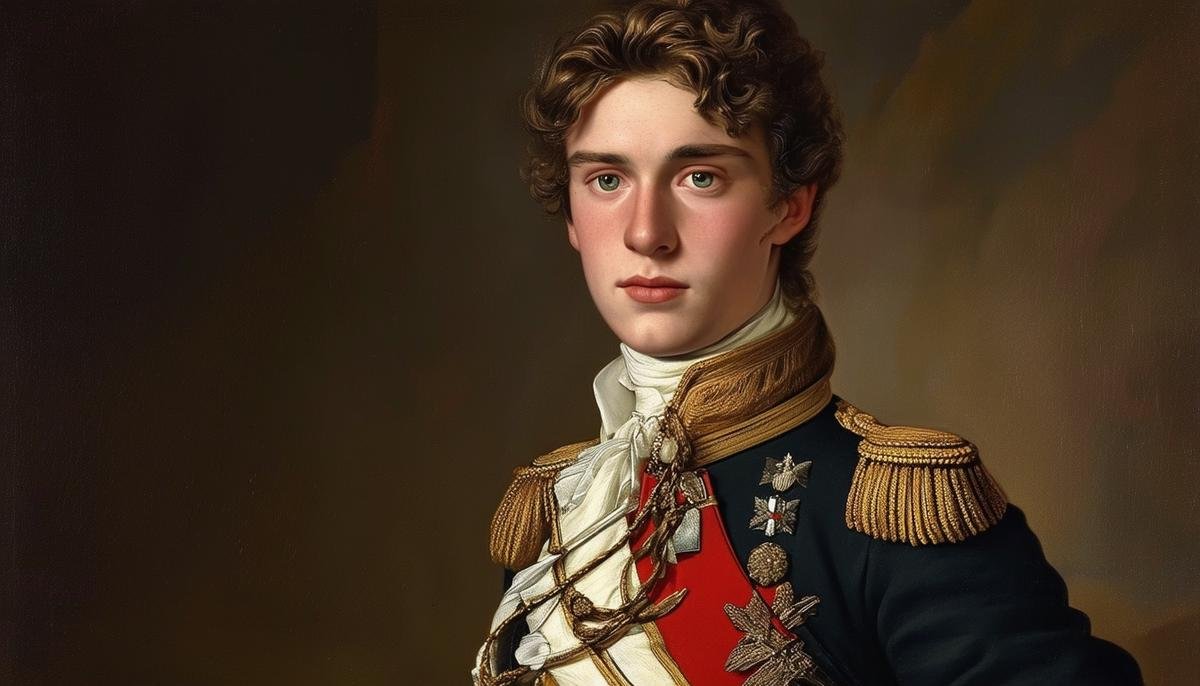
When we talk about the Hamilton family, the story often centers on Alexander Hamilton, the ambitious statesman, or Eliza, his steadfast wife. But woven into the fabric of their extraordinary lives is the poignant narrative of their eldest daughter, Angelica Hamilton, whose early life and family experiences sculpted a promising youth before tragedy cast a long, indelible shadow. Understanding Angelica’s early years and the profound impact of her family dynamic offers a vital lens through which to appreciate the full human cost of the era’s turbulent personal and political landscape.
At a Glance: Angelica Hamilton's Early Life and Family
- Born into Prominence: Angelica Hamilton, born in 1784, was the second child and eldest daughter of Alexander Hamilton and Elizabeth Schuyler.
- A Gifted Youth: She was described as sensitive, lively, and particularly musical, showing a keen interest in piano and harp, even studying French and dance.
- Named for Influence: Her namesake, her maternal aunt Angelica Schuyler Church, played a significant role in her early life, including gifting her a piano.
- A Life-Altering Tragedy: At age 17, Angelica suffered a severe mental breakdown following the death of her beloved older brother, Philip, in a duel.
- Living in "Eternal Childhood": This event left her in a state of profound mental instability, characterized by a loss of memory and an inability to recognize family members.
- Enduring Family Devotion: Her parents, especially her mother Elizabeth, demonstrated unwavering love and care throughout her condition, even after Alexander’s own tragic death.
- A Long Life of Care: Angelica lived to the age of 72, cared for by her family and later in a specialized setting, always holding onto fragmented memories of her brother.
A Budding Talent: The Promise of Angelica's Youth
Born on September 25, 1784, Angelica Hamilton entered the world as the second child and eldest daughter of two of America's most prominent figures: Elizabeth Schuyler and Alexander Hamilton. Her father, the first U.S. Secretary of the Treasury and a pivotal Founding Father, ensured his children were afforded every advantage available in the nascent republic. From a young age, Angelica showed great promise, capturing the hearts of those around her with her vivacious spirit and intellectual curiosity.
She was widely described as sensitive, lively, and notably musical—traits that endeared her to many and hinted at a bright future. Her very name, Angelica, carried weight, bestowed in honor of her maternal aunt, Angelica Schuyler Church, a woman known for her wit, charm, and intellect. This influential aunt took a special interest in young Angelica, even sending a piano from London as a gift, fostering the girl's musical inclinations. Imagine the Hamilton household, bustling with political discourse and social gatherings, yet often filled with the melodies of Angelica at her piano or harp, sometimes accompanying her brilliant father.
Her education was robust, reflecting the ambitions Alexander and Elizabeth held for their children. Angelica studied French, a language of diplomacy and culture, and took dance lessons alongside Martha Washington's children, placing her at the heart of elite colonial society. Her father, despite his overwhelming responsibilities, remained attuned to her development. In November 1793, he penned a letter to nine-year-old Angelica, not merely with fatherly affection, but with gentle guidance, encouraging good behavior and a readiness to apologize—a testament to his engagement in her moral and social upbringing. These were the formative years, rich with opportunity and affection, painting a picture of a young woman poised for a remarkable life, intellectually curious and artistically inclined, surrounded by a loving, if busy, family.
The Shadow Falls: Philip's Tragic Death and Its Immediate Aftermath
Life in the early American republic, even for families of great privilege, was fraught with unexpected dangers and profound sorrows. For the Hamiltons, the year 1801 would mark an irreversible turning point, shattering the bright promise of Angelica's youth and altering the trajectory of her entire life. This seismic event was the death of her older brother, Philip.
Philip Hamilton, a gifted and spirited young man, met a tragic end in November 1801. He was killed in a duel, defending his father's honor against the politician George Eacker. The shockwaves of his death reverberated through the Hamilton household, leaving an indelible scar on each family member. For 17-year-old Angelica, the trauma was particularly devastating. Her sensitive nature, once a source of artistic expression, proved vulnerable to the profound grief and shock.
Historian Ron Chernow, a leading biographer of Alexander Hamilton, meticulously documented the immediate and lasting impact of Philip’s death on Angelica's mental health. The loss plunged her into a severe mental breakdown, from which she would never fully recover. Psychiatrist Allan McLane Hamilton, her nephew, later described her condition as "insanity" and "permanently impaired," directly attributing it to the overwhelming shock of Philip's death. This was no fleeting sadness; it was a profound unraveling of her mind, leaving her in a state that family members often referred to as "eternal childhood."
A Life Forever Changed: Living in "Eternal Childhood"
The mental breakdown Angelica experienced following Philip’s death was not a temporary affliction; it reshaped her reality entirely. She became "lost to herself," as her sister Eliza would later articulate, existing in a perpetual state of childhood. This meant she was often unable to recognize even her closest family members, navigating the world through a veil of disoriented memories. The woman who had once been lively, musical, and intellectually curious was now identified as "mentally unstable and insane" – terms that, while harsh by modern standards, conveyed the depth of her impairment to her contemporaries.
Her nephew, the psychiatrist Allan McLane Hamilton, offered a clinical, though deeply sympathetic, perspective on her condition. He confirmed that despite her mother's tireless care and the family's fervent hopes, there was "no amelioration" in her state. The shock of Philip's death had created a permanent rift in her cognitive and emotional being. You can almost imagine the quiet anguish of Elizabeth and Alexander, witnessing their vibrant daughter reduced to this state, a constant reminder of their eldest son's tragic demise. It was a private grief that overshadowed their public lives, a profound personal challenge for a family already accustomed to facing immense pressures.
Family Devotion and Enduring Care
Despite the heartbreak and the overwhelming nature of Angelica's condition, her parents, Alexander and Elizabeth, met the challenge with unwavering love and devotion. Their efforts to alleviate her suffering and bring her comfort paint a poignant picture of familial care in a time when mental health understanding was nascent at best.
Alexander Hamilton, ever the problem-solver, sought practical ways to soothe his daughter. Recognizing her love for birds, he would request watermelons for her and even acquired three parakeets, hoping their cheerful presence might offer a flicker of joy in her clouded world. These small gestures, from a man burdened with the affairs of a young nation, speak volumes about his profound paternal affection.
Contemporaries, like James Kent, also noticed Angelica's altered demeanor, describing her as having "uncommon simplicity and modesty of deportment." This observation suggests that even in her impaired state, remnants of her gentle and innocent nature persisted, further deepening the family's protective instincts. Her mother, Elizabeth, bore the brunt of her daily care, a task of immense emotional and physical demand. Elizabeth's resilience and endless patience shine through historical accounts, demonstrating a maternal love that transcended the bounds of her daughter's illness.
Even after Alexander Hamilton's own tragic death in a duel in July 1804, a mere three years after Philip's, Elizabeth’s commitment to Angelica never faltered. Now a widow facing immense financial and emotional hardship, Elizabeth's capacity to care for Angelica at home diminished. It was a heartbreaking decision, but for Angelica’s well-being and the practicality of the situation, a different arrangement became necessary. She was eventually placed with a Dr. MacDonald of Flushing, Queens, a more specialized environment where she could receive constant professional attention. This decision, undoubtedly agonizing, underscores the Hamilton family’s enduring commitment to Angelica’s welfare, ensuring she was in capable hands for the remainder of her long life.
Later Years and a Legacy of Love
Angelica Hamilton resided with Dr. MacDonald in Flushing, Queens, for the rest of her life, a period stretching over five decades. In this sheltered environment, away from the demanding world she could no longer fully comprehend, she found a measure of peace. Her condition, however, remained unchanged. She constantly referred to Philip as if he were still alive, living in a personal reality where her beloved brother had never left her. Her musical talents, though perhaps not as refined as they once were, remained a source of comfort; she continued to play old-fashioned songs and minuets on her piano, echoes of her vibrant youth resonating in her "eternal childhood."
The family's care and concern for Angelica remained unwavering, a testament to the strong bonds that held the Hamiltons together through triumph and tragedy. Decades later, as her mother Elizabeth neared the end of her own remarkably long life, Angelica's well-being was still a paramount concern. In 1848, Angelica's sister, Eliza Hamilton Holly, facilitated the move of their 91-year-old mother to Washington, D.C. Elizabeth lived there until her death in 1854 at the extraordinary age of 97.
Even in her final wishes, Elizabeth Hamilton remembered her eldest daughter. Her will explicitly requested that her other children be "kind, affectionate, and attentive" to her "unfortunate daughter Angelica." This final plea highlights not only Elizabeth's enduring love but also the unspoken understanding that Angelica would always require a unique kind of care and compassion from her siblings. Eliza Holly, reflecting on her sister's condition, anticipated Angelica's passing as a "happy release," poignantly noting she had been "Lost to herself half a century." It was a recognition of the profound suffering and absence that defined Angelica's life since that fateful November day in 1801.
Angelica Hamilton died in New York in February 1857 at the age of 72, just three years after her mother. She was laid to rest in Sleepy Hollow Cemetery in Westchester County, New York, a tranquil final resting place for a life marked by early promise, devastating loss, and an enduring legacy of familial love. To Learn about Angelica Hamilton more deeply is to understand not just a historical figure, but the profound human experience of a family grappling with mental illness long before its complexities were understood.
A Deeper Understanding of Resilience and Love
Angelica Hamilton's story, particularly her early life and the family's profound response to her tragedy, offers more than just a historical footnote. It’s a compelling narrative of how even the most prominent families faced unimaginable personal challenges, underscoring the universal themes of love, loss, and resilience. Her life, though marked by immense suffering, speaks to the enduring strength of the Hamilton family—a testament to Elizabeth's unwavering devotion and Alexander's deep paternal affection. They navigated a heartbreaking reality with as much grace and care as their times allowed, leaving behind a legacy not just of political achievement, but of profound human empathy. By understanding Angelica's journey, we gain a richer, more nuanced appreciation for the Hamilton family beyond the textbooks, seeing them as complex individuals who loved fiercely and endured profound sorrow, reminding us that even in the grand sweep of history, human connection remains paramount.