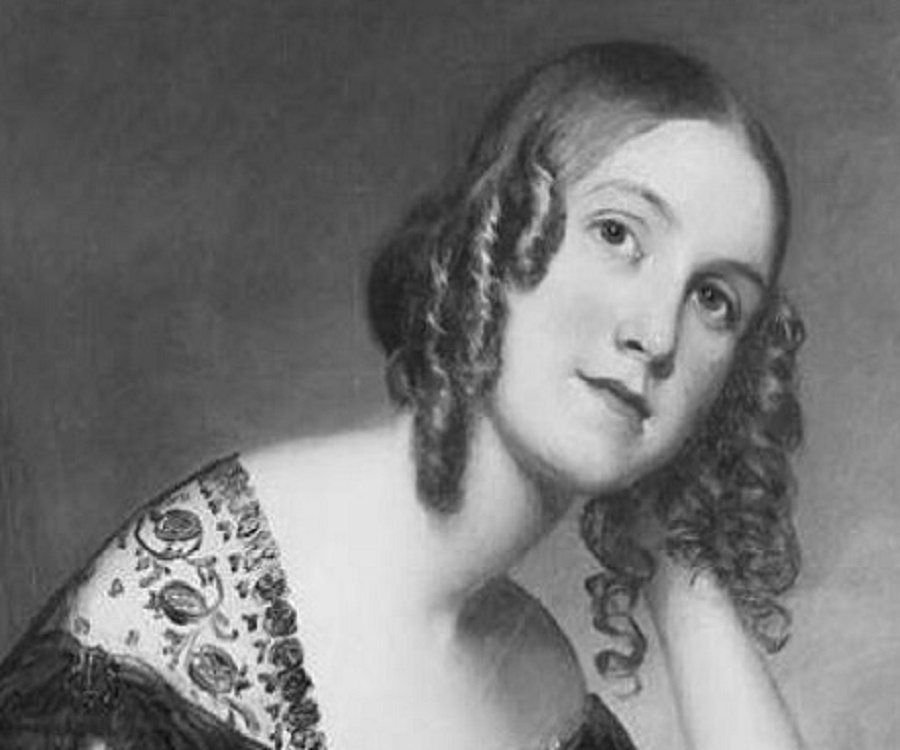
Angelica Hamilton, a name that evokes both the brilliance of an iconic American family and the profound quiet of a life tragically altered, offers a window into the intersection of personal grief and the nascent understanding of mental health in 19th-century America. You're about to delve into the complex story of her later life, the unwavering care she received, and her eventual death—a narrative that is as heartbreaking as it is illuminating, revealing the deep bonds of family love in the face of insurmountable challenges.
The tragedy of Angelica Hamilton, the eldest daughter of Alexander Hamilton and Eliza Schuyler Hamilton, is a poignant testament to the fragility of the human mind and the enduring power of familial devotion. While her father shaped a nation, Angelica's world was shaped by an internal landscape forever changed by a single, shattering event. This isn't just a historical account; it's a reflection on caregiving, mental wellness, and the quiet dignity of a life lived outside the spotlight, yet deeply cherished.
At a Glance: Angelica Hamilton's Enduring Story
- Born into Privilege: The first daughter of Alexander and Eliza Hamilton, known for her charm, intellect, and musical talent.
- A Shattering Loss: At age 17, she suffered a severe mental breakdown following the death of her beloved elder brother, Philip Hamilton, in a duel.
- Lifelong Impairment: Her mind was permanently impaired, consigning her to a state described as "eternal childhood" with intermittent lucidity.
- Mother's Devotion: Cared for extensively by her mother, Eliza Hamilton, at home for decades.
- Specialized Care: Later placed under the professional care of Dr. MacDonald in Flushing, Queens, where she remained until her death.
- Enduring Rituals: Found solace in music, playing the same old songs on her piano, and constantly spoke of her deceased brother as if he were alive.
- Died at 73: She lived a long life by 19th-century standards, passing away around 1857-1858, a few years after her mother.
- A Legacy of Love: Her story highlights the profound compassion and resilience of her family, particularly her mother, in an era with limited understanding of mental illness.
The Weight of a Name: Untangling the Angelica Hamiltons
Before we fully immerse ourselves in her story, it's crucial to clarify a common point of confusion. The name "Angelica Hamilton" appears in historical records associated with two different individuals, which can easily lead to misinterpretations.
The Angelica Hamilton whose later life, care, and death we explore here is the daughter of Alexander Hamilton and Eliza Schuyler Hamilton, born on September 25, 1784. She was named after her formidable and vivacious aunt, Angelica Schuyler Church, Alexander Hamilton's sister-in-law, who was known for her wit and charm. This Angelica's story is one of intellect, talent, and profound personal tragedy.
However, you might encounter records of another Angelica Hamilton (born 1819, daughter of James Alexander Hamilton, Alexander Hamilton's third son) who married Richard Milford Blatchford and died in 1868. While historically significant in her own right, her life path and tragic narrative are distinct from that of Alexander and Eliza's daughter. Our focus remains squarely on the Angelica Hamilton who experienced a lifelong mental impairment, the subject of detailed accounts from her family and biographers like Ron Chernow and Allan McLane Hamilton. It's her unique journey that forms the heart of this comprehensive guide.
The Budding Promise of a Bright Young Woman
Imagine, for a moment, the world Angelica Hamilton was born into. She arrived in New York City shortly after the close of the Revolutionary War, into a household bustling with intellect, ambition, and the vibrant energy of a nation being forged. As the first daughter after two sons (Philip and Alexander Jr.), Angelica held a special place. Her father, Alexander Hamilton, was known for his affectionate nature, especially towards his children, and Angelica, in particular, seemed to capture his heart.
Described as "a very beautiful girl," Angelica inherited the charm and spirit of her namesake aunt. Biographers like Allan McLane Hamilton, Alexander Hamilton's grandson, noted her as a "charming character" who was "clever and talented." One of her most cherished talents was music, particularly the piano. You can almost picture her, a young girl, seated at the keyboard, her father overseeing and encouraging her lessons. We know, for instance, that her aunt, Angelica Schuyler Church, even arranged for a governess "who understands music pretty well" to instruct both Angelica and her younger sister, Eliza, while living in London. The very piano she played, a venerable instrument bought in London by her aunt, would stay with her for decades, becoming a constant companion through unimaginable adversity.
Beyond music, Angelica was also encouraged in her studies. A letter from Alexander Hamilton to his daughter in November 1793 reveals his hopes for her, urging her to begin studying French and to "behave in such a manner as will secure to you the good-will and regard of all those with whom you are." It paints a picture of a doting father invested in his daughter's education and moral development, a normal, happy childhood for a bright girl on the cusp of womanhood. This early promise makes the ensuing tragedy all the more stark.
The Shattering Blow: Philip's Death and Angelica's Irreversible Breakdown
The year 1801 would forever cleave Angelica Hamilton's life into "before" and "after." Up until that point, you might have envisioned her as a typical vibrant young woman of her era, with the world seemingly at her feet. However, a catastrophic event irrevocably altered her path and plunged her family into an agony that would stretch for decades.
On November 23, 1801, Angelica's older brother, Philip Hamilton, was killed in a duel with George Eacker. Philip was only 19, and his death was not only a profound loss for Alexander and Eliza but also a particularly devastating blow to Angelica. She and Philip were exceedingly close, "nearly her own age," and shared a deep bond.
The news of Philip's death, delivered to the family at their home, The Grange, had an immediate and catastrophic impact on the then 17-year-old Angelica. As Ron Chernow recounts in his biography of Alexander Hamilton, Angelica was "so unhinged by his death that she suffered a mental breakdown." Allan McLane Hamilton, her great-nephew, further details that "upon receipt of the news of her brother’s death... she suffered so great a shock that her mind became permanently impaired."
This wasn't a temporary period of acute grief; it was a permanent change. Angelica's mind, in that terrible moment, broke. She never fully recovered.
A Father's Desperate Attempts
Witnessing his daughter's rapid decline was another layer of torment for Alexander Hamilton, who was already grappling with the immense grief of losing his eldest son. Chernow describes how Hamilton did "everything in his power to restore her health at The Grange and catered to her every wish." In one particularly poignant detail, he even asked Charles C. Pinckney to send her watermelons and several parakeets—"She is very fond of birds"—in a desperate attempt to bring some joy or normalcy back into her shattered world.
You can imagine the heartbreaking futility of these efforts. Despite all the loving attention and the attempts to soothe her, "all the loving attention did not work, and her mental problems worsened." James Kent, a prominent jurist and friend of the family, tactfully described the teenage girl as having "a very uncommon simplicity and modesty of deportment," a gentle way of describing her altered state.
From that moment on, Angelica was consigned, in a sense, to an "eternal childhood." Her development, her understanding of the world, and her capacity for coherent thought were arrested. The promising young woman, full of talent and charm, vanished, replaced by a soul adrift in a fog of her own.
A Mother's Unwavering Devotion: Eliza's Lifelong Care
If Alexander Hamilton was heartbroken by Angelica's condition, it was Eliza, her mother, who bore the immense, day-to-day burden and profound emotional toll of caring for her mentally impaired daughter for decades. You can truly appreciate the depth of a mother's love when you consider the relentless nature of such care in the 19th century, with little understanding of mental illness and even fewer resources.
Eliza Hamilton's devotion to Angelica was legendary. For a very long time, Angelica remained under her mother's direct care, within the family home. This wasn't merely supervision; it was a constant, compassionate tending to the needs of a daughter who, though physically grown, remained trapped in a childlike state. Biographers note that "there was no amelioration in her condition," meaning despite Eliza's unwavering efforts, Angelica's state remained unchanged.
The Nature of Her Condition: A Glimpse into Her World
Angelica's impairment manifested in ways that were both heartbreaking and deeply consistent. She was only "intermittently lucid," meaning moments of clarity were rare and fleeting. She often did not recognize family members, a cruel twist for a mother who dedicated her life to her.
Yet, some aspects of her earlier life remained with her, acting as anchors in her fragmented reality. Her music, which her father had so loved to oversee and encourage, stayed by her all those years. To the end, she played the "same old-fashioned songs and minuets upon the venerable piano that had been bought for her, many years before, in London, by Angelica Church, during her girlhood." This piano, a tangible link to her early, happier years, became a conduit for her expression and perhaps, a form of self-soothing.
Even more profoundly, she constantly referred to her "dear brother so nearly her own age as if alive." For Angelica, Philip had never truly died. She would talk about him as though he were still present, a ghost inhabiting her timeless reality. This constant evocation of Philip, while painful for her family, also offered a glimpse into the depth of the bond that, even in its tragic shattering, had defined her.
Eliza's Enduring Legacy of Love
Eliza's commitment to Angelica never wavered. Even in her will, Eliza entreated her other children to be "kind, affectionate, and attentive to my said unfortunate daughter Angelica." This directive wasn't just a legal formality; it was a mother's final plea, a testament to her lifelong concern and a hope that the love and care she had provided would continue after her own passing. You can sense the profound anxiety and enduring tenderness in those words, knowing that her daughter would need care long after she herself was gone.
This period of Eliza's care, extending for decades, is a powerful example of familial resilience and love in the face of immense sorrow. It reminds us that even when healing isn't possible, care and compassion remain paramount. Learn more about Angelica Hamilton's family and early life challenges.
Professional Guardianship: Dr. MacDonald's Care in Flushing
As the decades wore on, and perhaps as Eliza herself aged, the practicalities of full-time home care for Angelica likely became more challenging. Eventually, Angelica was placed under the professional care of Dr. MacDonald, who operated an asylum or sanitarium in Flushing, Queens. This transition marked a shift from purely familial care to a more structured, medicalized environment, a common practice for families of means during that era when mental illness was just beginning to be understood as a medical condition rather than a moral failing.
Allan McLane Hamilton states that Angelica "was finally placed under the care of Dr. MacDonald of Flushing, and remained in his charge until her death at the age of seventy-three." This implies a significant period of her later life was spent within the specialized environment of Dr. MacDonald's institution.
Life Within the Asylum
While details of Angelica's daily life at Dr. MacDonald's are scarce, we can infer much from the known characteristics of her condition and the general practices of 19th-century asylums. It's important to remember that these institutions, while often primitive by modern standards, were intended to provide a measure of peace, order, and focused care that could be difficult to maintain in a private home. They offered a safe environment, away from the stresses of the outside world, where individuals like Angelica could live with dignity.
Her primary comforts and routines likely continued. We know she kept her music, still playing the "same old-fashioned songs and minuets" on her beloved piano. And the constant presence of Philip in her mind, her discussions of him as if he were alive, would have continued. For her, the institution might have simply been another home where these routines, these anchors of her internal world, could persist undisturbed.
The care provided by Dr. MacDonald and his staff would have focused on maintaining her physical health and offering a stable, predictable environment. While there was no "cure" for her condition, these institutions aimed to provide humane care and alleviate suffering, a testament to a growing, albeit limited, understanding of mental health needs. Her long tenure under Dr. MacDonald’s care highlights the enduring nature of her condition and the necessity of ongoing support.
Living in a Timeless Echo: Angelica's "Later Life"
Angelica Hamilton's later life spanned over five decades after her breakdown, a remarkable period given the medical understanding of the time. Her experience offers a rare glimpse into the long-term impact of severe mental illness on an individual and their family in the 19th century. You might find yourself contemplating what it means to "live" when one is "lost to oneself."
For Angelica, her later life was characterized by a profound stasis. While the world outside moved on—her father died tragically in 1804, her siblings pursued their own lives, new generations were born—Angelica remained largely tethered to the emotional landscape of 1801. Her perception of time was altered; her brother Philip was always alive, always young. This wasn't a conscious choice but a permanent state of being, a brain unable to process the passage of time or the permanence of loss in a conventional way.
The Unseen Burden on Family
Her condition cast a long shadow over the Hamilton family, particularly her mother. Eliza, who outlived her husband by 50 years, carried the burden of Angelica's care throughout most of her own life. This wasn't a burden of resentment, but one of deep, enduring sorrow and unwavering responsibility.
Eliza's love for Angelica remained fierce, yet it was not without its own silent agony. Her younger sister, Eliza Hamilton Holly, captured this sentiment powerfully in 1856, contemplating Angelica's expected death: "Poor sister, what a happy release will be hers. Lost to herself half a century!" This single sentence speaks volumes, expressing both profound sympathy for Angelica's suffering and a quiet acknowledgment of the family's long watch. For "half a century," Angelica had existed in a state of suspended animation, present but not fully participating in the world around her. This perspective offers a profound insight into the emotional complexity of caregiving for a loved one with chronic mental illness, where the hope for release can sometimes outweigh the desire for continued presence.
Angelica's longevity, living to the age of 73, meant that she outlived many of her siblings and even her mother. This was unusual for someone with such a severe condition in an era of limited medical interventions, perhaps a testament to the consistent and loving care she received throughout her life. Her existence, though tragic, became a quiet monument to resilience, both hers and her family's.
The Final Release: Angelica's Death
After more than half a century spent in a world shaped by the ghost of her beloved brother and the fragments of her own memory, Angelica Hamilton's long journey came to an end. She died at the age of seventy-three, around 1857 or 1858. This date aligns with her birth year of 1784 and the various accounts that state she lived to be 73. It also fits with her sister Eliza's 1856 contemplation of her "expected death."
Her passing was, as her sister Eliza Hamilton Holly had predicted, likely a "happy release" from a mind that had been "lost to herself." For those who had cared for her, it brought the bittersweet closure to a lifelong vigil.
Angelica Hamilton was laid to rest in Sleepy Hollow Cemetery in Sleepy Hollow, New York. This historic and picturesque cemetery is also the final resting place for her parents, Alexander and Eliza Hamilton, and several of her siblings. Her burial alongside her family underscores the profound bonds that transcended even the challenges of her condition, ensuring that in death, she was reunited with those who loved and cared for her so deeply throughout her extraordinary and tragic life.
Her death, like her life, was a private affair, largely overshadowed by the towering legacy of her father. Yet, for her family, it marked the end of a unique and poignant chapter, a testament to a love that never diminished, even when the person it embraced was no longer fully present.
Beyond the Biography: Lessons in Care, Compassion, and Legacy
Angelica Hamilton's story, though deeply personal and set in a distant past, resonates with timeless themes that remain relevant today. As you reflect on her life, what insights might you glean about care, mental health, and the enduring power of human connection?
1. The Evolution of Mental Health Understanding:
Angelica's condition highlights the nascent state of mental health knowledge in the early 19th century. Her "mental breakdown" was described simply as her "mind becoming permanently impaired." There was no diagnosis of trauma, psychosis, or other modern terms. Her story underscores the immense progress in understanding and treating mental illness, reminding us how far we've come—and perhaps, how far we still have to go. It prompts us to consider the hidden lives of countless individuals suffering from similar conditions in eras where compassion was often the only available 'treatment.'
2. The Unseen Labor of Caregiving:
Eliza Hamilton's decades of unwavering care for Angelica offer a powerful testament to the dedication of caregivers, particularly mothers, throughout history. You can see in Eliza's actions and her will's plea a recognition of the profound, often invisible, labor involved in sustaining a loved one. It speaks to the emotional, physical, and financial toll of long-term care, a reality many families continue to face today.
3. The Power of Familial Love:
Despite the tragic circumstances, Angelica was never abandoned. She received consistent, compassionate care, first from her mother, then from a specialized institution. The family's enduring love, even in the face of a loved one who could not always reciprocate or even recognize them, is a testament to the strength of their bonds. Her sister Eliza's heartbreaking quote, "Lost to herself half a century!", speaks not of abandonment but of a deep empathy and longing for her sister's peace.
4. Finding Solace in Routine and Memory:
Angelica's consistent return to her music and her conversations about Philip illustrate the profound human need for comfort, routine, and connection to significant memories, even when the present is clouded. Her piano and her brother's memory were her anchors, her constant companions in a fragmented world. This offers a poignant reminder of the simple comforts that can sustain those grappling with cognitive challenges.
Angelica Hamilton's later life, marked by lifelong care and a quiet dignity, may not have been one of public achievement, but it was undoubtedly a life imbued with profound love and unwavering dedication. Her story serves as a humanizing counterpoint to the grand narratives of her famous family, reminding us that behind every historical figure lies a tapestry of personal experiences, including those of immense sorrow and enduring compassion.
Frequently Asked Questions (FAQs) About Angelica Hamilton's Life and Legacy
You might still have questions about Angelica's story, especially given the nuances of historical accounts and the dual identity issue. Here are some common inquiries clarified:
When did Angelica Hamilton (Alexander's daughter) die?
Angelica Hamilton, daughter of Alexander and Eliza Hamilton, died at the age of 73, which places her death around 1857-1858. She was born on September 25, 1784.
What happened to Angelica Hamilton?
Angelica suffered a severe mental breakdown in 1801, at age 17, immediately following the death of her older brother, Philip Hamilton, in a duel. Her mind became permanently impaired, and she lived the rest of her life in a state of "eternal childhood," with intermittent lucidity. She never fully recovered.
Did Angelica Hamilton ever marry?
No, Angelica Hamilton (daughter of Alexander and Eliza) never married. Her mental impairment made such a life path impossible. The Angelica Hamilton who married Richard Milford Blatchford was a different individual, the daughter of Alexander Hamilton's third son, James Alexander Hamilton.
Where is Angelica Hamilton buried?
Angelica Hamilton is buried in Sleepy Hollow Cemetery in Sleepy Hollow, New York, alongside her parents, Alexander and Eliza Hamilton, and several of her siblings.
How did Alexander Hamilton try to help Angelica after her breakdown?
Alexander Hamilton was deeply distressed by his daughter's condition and tried everything in his power to help her at their home, The Grange. This included asking for specific comforts like watermelons and parakeets, as Angelica was "very fond of birds," in an attempt to bring her joy and solace. Unfortunately, these efforts did not restore her health.
Who cared for Angelica Hamilton throughout her life?
Angelica was primarily cared for by her mother, Eliza Hamilton, for many decades within the family home. Later in her life, she was placed under the professional care of Dr. MacDonald in Flushing, Queens, where she remained until her death.
Moving Forward: Reflecting on a Life of Enduring Love
Angelica Hamilton's story is more than just a footnote in the grand history of the Hamilton family; it's a profound human narrative. It invites you to consider the silent strength of caregivers, the historical journey of mental health understanding, and the unwavering power of love that transcends even the most challenging circumstances. Her life, though marked by tragedy, stands as a testament to the deep, enduring compassion that defines the very best of humanity.
As you conclude your exploration of Angelica's later life, care, and death, remember her not just as a figure of sorrow, but as a symbol of the profound connections that bind families, and the quiet dignity of a life lived, and loved, to its fullest extent possible.